Recent posts
→ Kinetic stabilization's effect on yogurt
Yogurt is a neat interplay of biology, chemistry, and physics. Physics is usually disregarded, but I’ve found it to be a big contributor to the resulting texture of the yogurt.
Unsolved problems haunt you in a good way. Long ago, I had tried to replicate the velvety texture of Straus’s European-style yogurt at home. But my results were grainy and weepy. Dredging through the recesses of our kitchen to prepare for a move, I found our lonely sous vide. It stirred a latent curiosity: should I try with this?
[Straus yogurt] is slowly cultured and vat-set. Unlike other yogurts, which are incubated inside their plastic cups, we incubate our yogurt in stainless-steel vats and fill our recyclable plastic containers with cooled yogurt.
Presumably they use glycol-jacketed vats to heat, cool, and ferment the milk in bulk. My intuition is that by fermenting (and cooling!) with thermal envelopes you effectively eliminate kinetic disruptions (sloshing, convective heating, shearing). In my research, no yogurt recipe mentioned kinetic stability, but I believe it’s a huge contributor to the resulting mouthfeel of the yogurt.
I don’t understand all the forces at play, but in brief, we’re transforming liquid (milk) into a gel by neutralizing the electrostatic charge of the proteins so they can bind into a three-dimensional mesh. As the milk transitions to a gel, those delicate connections can be irreparably ruptured by movement. Maintaining a completely stationary vessel throughout fermentation and cooling preserves the delicate structural integrity of the developing gel.
The graph below shows the general approach, where time and temperature are not as critical as minimizing agitation.
Sous vide allows you to uniformly heat, cool, and ferment the milk with zero physical disturbance. In all of the subsequent batches I inoculate with 5% by weight. The only variance is time and temperature.
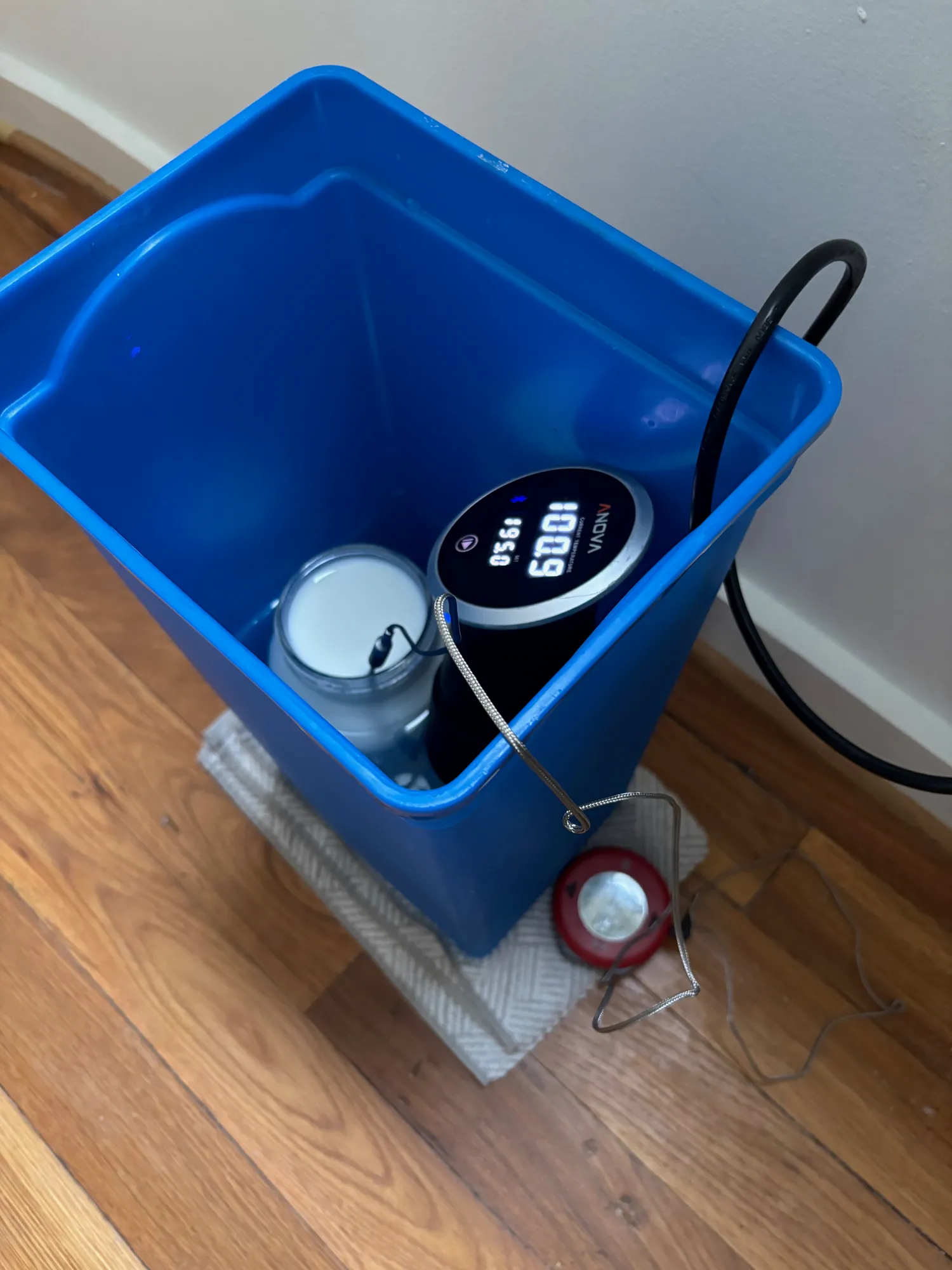
Apple iPhone 15 · 26 mm · f/1.6 · 1/26 s · ISO 640
Batch 1
- 20-minute denature at 185°F
- 8 hours at 110°F
Beginner’s luck brought me a custard-like mass with very low whey separation (syneresis).
Batch 2
- 5-minute denature at 195°F
- 12 hours at 89°F
The goal of this batch was to encourage gel strength through aggressive denaturing and a more gradual drop in pH, allowing the proteins plenty of time to organize. Unfortunately, at that low temperature, the cultures threw off a bunch of long-chain sugars (exopolysaccharides) that resulted in an off-putting ropey texture.
→ Speedbox 3.0 e‑bike tuning chip
Impressions
Days after buying my bike I regretted forgoing the Bosch speed motor option. My third generation motor is factory limited to 20MPH. I talked myself out of the $1,000 upgrade (!!) reasoning a slower bike was a safer bike and that the 28MPH limit would invite reckless speeding. But in the first week of crisscrossing San Francisco for errands and joy-rides it was plain that it was slowing me down. Even with SF’s hills and traffic signals I found myself constantly running up against the limit. Two or three strokes from a cold-start I would feel the lurch of the motor de-activating and all of the bike’s 65 pounds leaning into me.
Since I don’t own a car my Mom drove me, my bike, and few boxes up the road to my new home in a suburban mountain town. So far shopping for groceries, a beach day, and visiting friends is all within reach of two wheels. There are enough bike trails and back roads that I feel safe enough to glance between errands without the threat of traffic. Even elevation (which there is a lot of here) is manageable now at 13 or 15MPH, steadily chugging up the hill to the hum of the motor with a watermelon and a case of beer in tow.
But distances are long – picking up toilet paper is a 16 mile round trip. The monotony of the long flats begins to grate while the motor, programmatically throttled, more or less sits idle between my legs while I keep slugging away at 21MPH. The bike has in some ways felt like a hindrance instead of an enabler to my mobility. So I bought a tuning chip from the Czech Republic that manipulates the controller’s speed sensor readings to obviate the limit. Now, the Bosch motor continues to provide assistance past 20MPH with no noticeable degradation in performance (battery range aside). Installation was easy and has since “just worked”. It has washed my bike of its limitations. I’m free again.
Installation
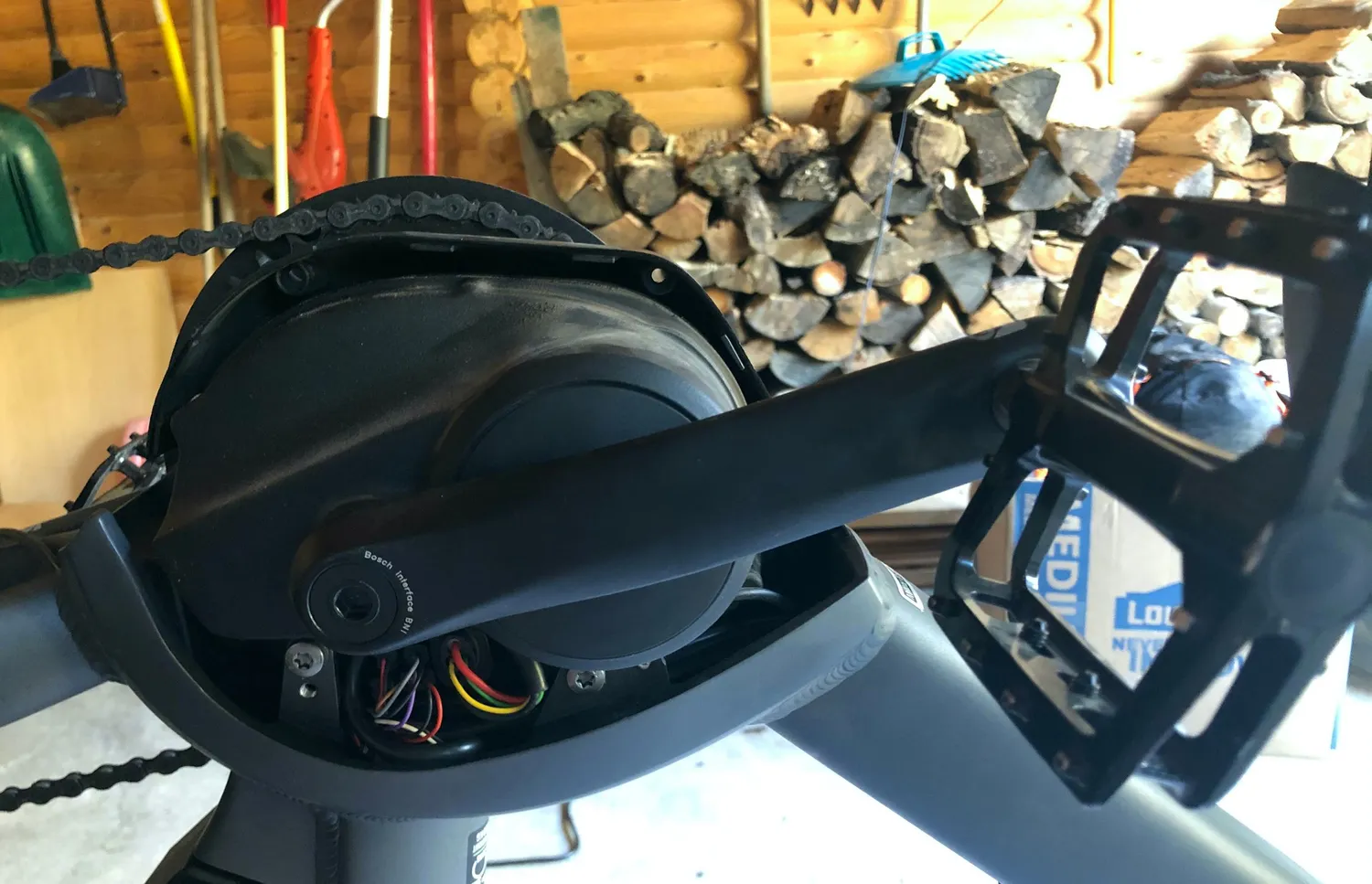
Unfasten the motor housing by removing 2 allen screws on the drive-side and 3 phillips screws on the non-drive side. The housing can be removed without pulling the crank.
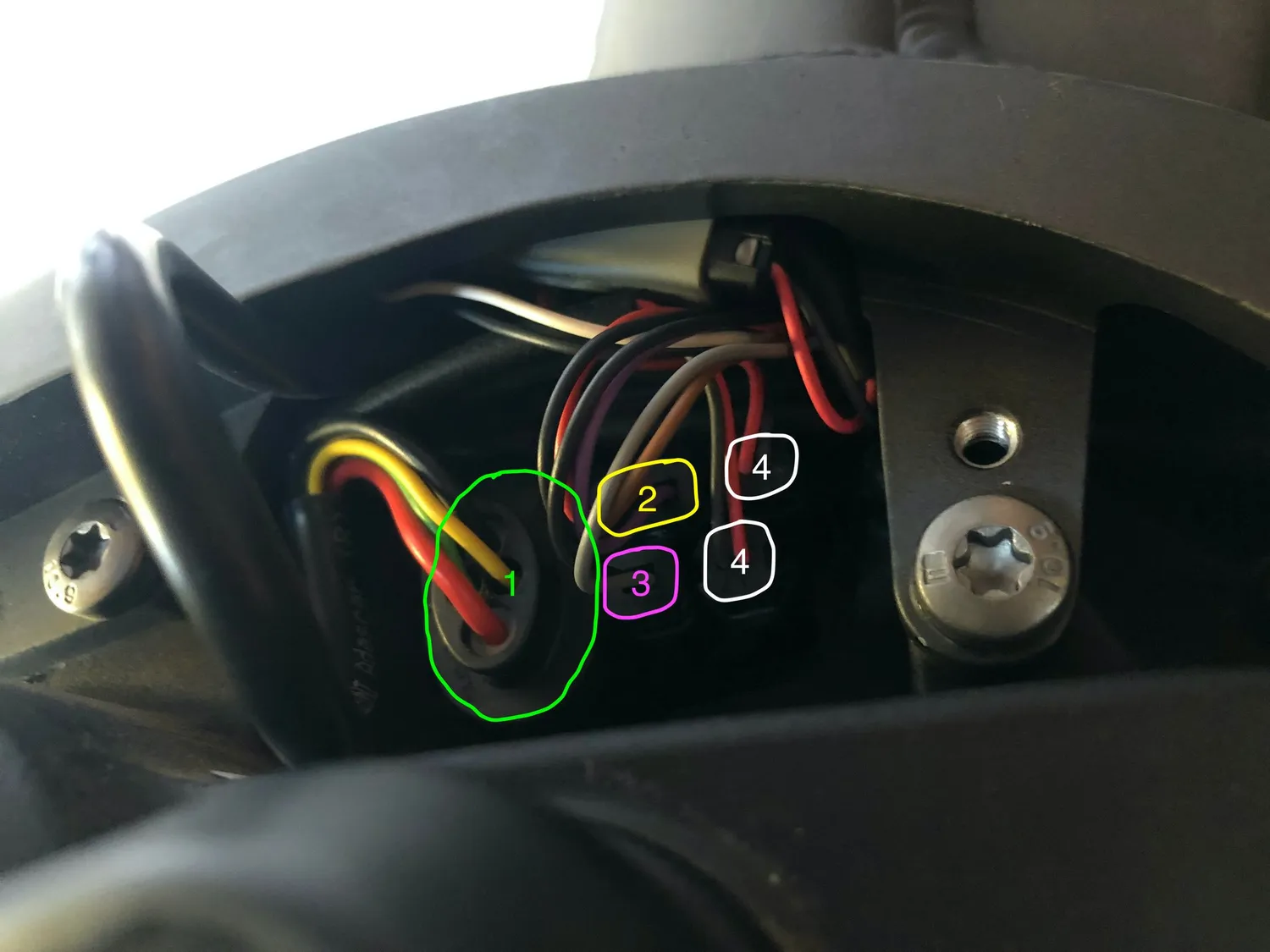
Remove the display cable (2) and the speed sensor (3) and insert into the reciprocal Speedbox junction connectors. The battery (3) and light cables (4) can be left as is.
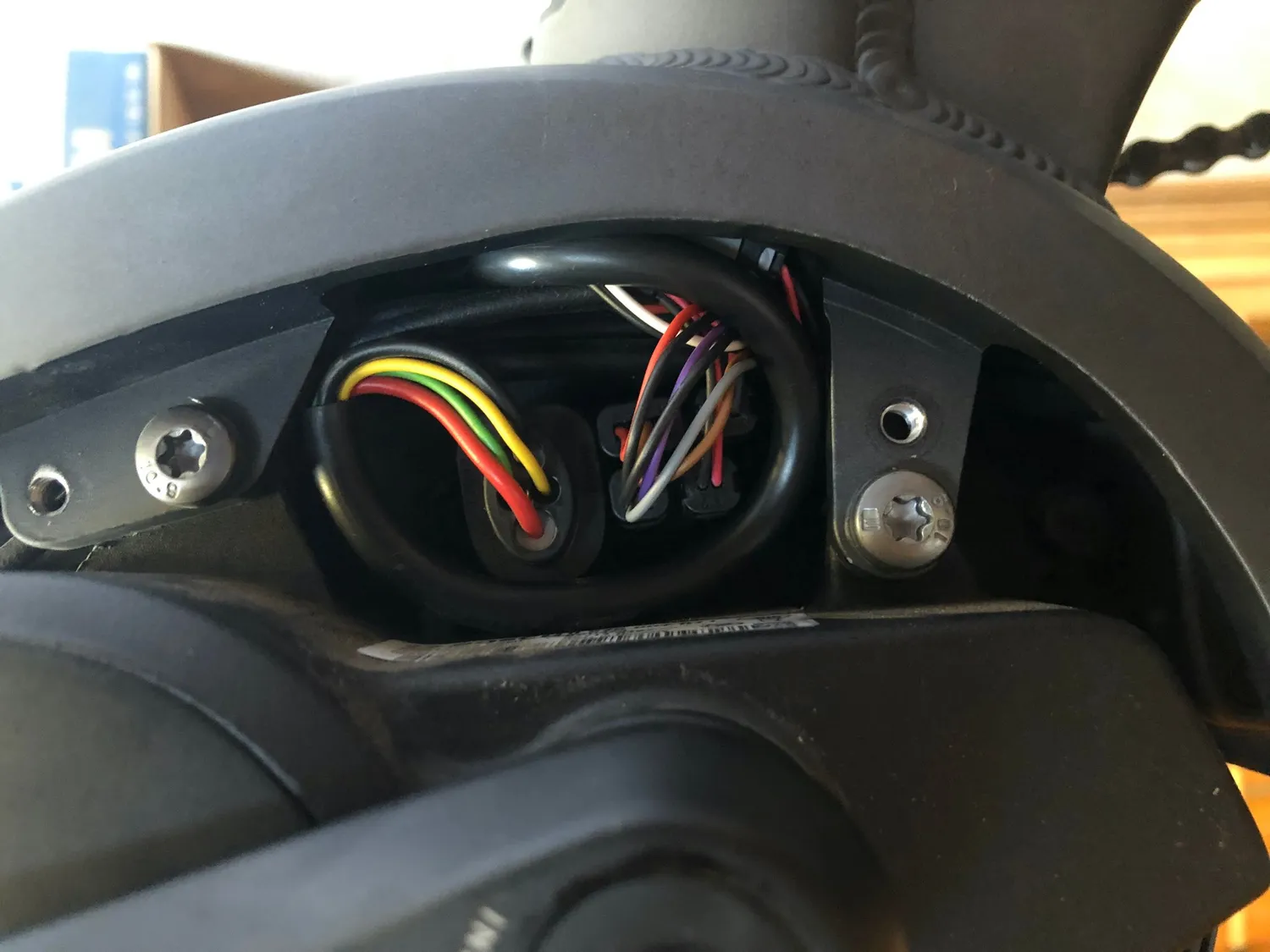
I nestled the Speedbox chip and cables into the seatpost tube and fixed their position with the battery cable.
→ Liu
Cixin Liu, The Three-Body Problem
There’s a strange contradiction revealed by the naivete and kindness demonstrated by humanity when faced with the universe: On Earth, humankind can step into another continent, and without a thought, destroy the kindred civilizations found there through warfare and disease. But when they gaze up at the stars, they turn sentimental and believe that if extraterrestrial intelligences exist, they must be civilizations bound by universal, novel, moral constraints, as if cherishing and loving different forms of life are parts of a self-evident universal code of conduct.
I think it should be precisely the opposite; Let’s turn the kindness we show toward the stars to members of the human race on Earth and build up the trust and understanding between the different peoples and civilizations that make up humanity.
The creation myths of the various peoples and religions of the world pale when compared to the glory of the big bang. The three billion year history of life’s evolution from self-producing molecules to civilization contains twists and romances that cannot be matched by any myth or epic … I seek only to create my own worlds using the power of imagination, and to make known the poetry of Nature in those worlds, to tell the romantic legends that have unfolded between Man and Universe.
→ Camus, Larson
Albert Camus, The Stranger
Camus refers to religion as a form of “philosophical suicide.” This book was published in 1942 and still today rings true and vibrant.
Erik Larson, The Devil in the White City: A Saga of Magic and Murder at the Fair that Changed America
Captivating portrait of late 19th century Chicago as the city was in the midst of its ascendancy to a major United States city-center. Larson goes to great lengths to capture the mood, smells, and energies of the city and nation. It’s the best kind of historical narrative held together by an engaging backdrop of murder and mystery.
→ Gyasi, Larsson, Rudder
Yaa Gyasi - Home Going
A multi-perspective narrative that is rich in symbolism. I like Gyasi’s very nuanced perspective of the shared responsibility of slavery’s origin. While the Asantes, Fa, Ga are complicit in slave tradings beginnings, that may not have been true if they could have understood the full consequences of their participation.
Home Going starts in Africa where slavery begins, and follows its arc of influence over the span of 7 generations through the American South and into modern-day California. Slavery is the seed from which a legacy of injustice sprouts and grows under the provision of patriotism and tradition. At the same time, we witness the slow restoration of justice through each generation. Each subsequent family lifting up the next of kin, in some ways, “bringing them home”.
Some of the literary devices in the book were off?
He was like the blind cat that moved through the dark forest solely on instinct, avoiding the logs and rocks that threatened it or had hurt it once before.
His eyes looked like a lot of things. Like the clear puddles that stood over the mud that she and Hazel liked to jump in, or like the shimmering body of a golden ant she had once seen carrying a blade of grass across a hill.
But lots of great moments throughout with a focus on the long tail of evil:
Originally, he’d wanted to focus his work on the convict leasing system that had stolen years off of his great-grandpa H’s life, but the deeper into the research he got, the bigger the project got. How could he talk about Great-Grandpa H’s story without also talking about his grandma Willie and the millions of other black people who had migrated north, fleeing Jim Crow? And if he mentioned the Great Migration, he’d have to talk about the cities that took that flock in. He’d have to talk about Harlem. And how could he talk about Harlem without mentioning his father’s heroin addiction—the stints in prison, the criminal record? And if he was going to talk about heroin in Harlem in the ’60s, wouldn’t he also have to talk about crack everywhere in the ’80s? And if he wrote about crack, he’d inevitably be writing, too, about the “war on drugs.” And if he started talking about the war on drugs, he’d be talking about how nearly half of the black men he grew up with were on their way either into or out of what had become the harshest prison system in the world. And if he talked about why friends from his hood were doing five-year bids for possession of marijuana when nearly all the white people he’d gone to college with smoked it openly every day, he’d get so angry that he’d slam the research book on the table of the beautiful but deadly silent Lane Reading Room of Green Library of Stanford University. And if he slammed the book down, then everyone in the room would stare and all they would see would be his skin and his anger, and they’d think they knew something about him and it would be the same something that had justified putting his great-grandpa H in prison, only it would be different too, less obvious than it once was
Stieg Larsson - Girl with the Dragon Tattoo
I surprised myself and I really enjoyed this book. And doubly-great to follow up with a viewing of David Fincher’s interpretation. Watching the film I realized that the story really is pretty tightly composed.
I loved the origin story of Lisbeth Salander and the dynamic that evolves between her and Mikael Blomkvist. Lisbeth’s character is deeply motivated and that carried parts of the story, and the story drove parts of her character to create a really neat interplay.
Christian Rudder - Dataclysm
Incredible book! At first I was disengaged with some of the data drawn across the pages – how males and females ranked each others beauty etc. But Rudder teases interesting narratives from the data to underscore trends, and suggest possible futures.
The era of data is here; we are now recorded. That, like all change, is frightening, but between the gunmetal gray of the government and the hot pink of product offers we just can’t refuse, there is an open and ungarish way. To use data to know yet not manipulate, to explore but not to pry, to protect but not to smother, to see yet never expose, and, above all, to repay that priceless gift we bequeath to the world when we share our lives so that other lives might be better—and to fulfill for everyone that oldest of human hopes, from Gilgamesh to Ramses to today: that our names be remembered, not only in stone but as part of memory itself.
People aren’t even that upset about the NSA, as gross as their overreach is. There have been many “Million” marches on Washington. Million Man, Million Mom, and so on. Recently, the hacker collective Anonymous called for a Million Mask March to protest, among other things, the PRISM program and government mass surveillance. The Washington Post captures the shortfall of public interest in just the first word of their coverage: “Hundreds of protesters …”